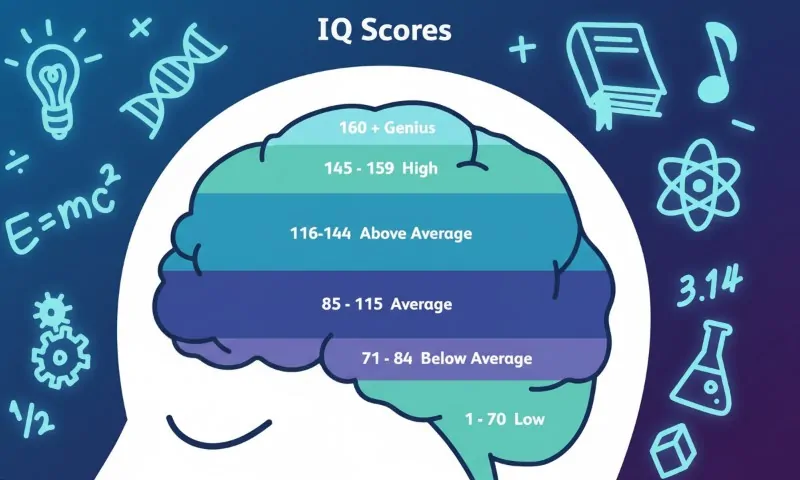
Every quiz you encounter online — whether a simple trivia challenge or a multi-step personality profile — represents a series of deliberate design choices. Those choices shape how questions are worded, how responses are scored, what results are presented, and how participants are expected to interpret them.
Understanding the process behind quiz design can help you engage with quizzes more critically and get more genuine value from them. This article walks through the key stages of developing an online quiz, from initial concept to result presentation.
Stage One: Defining the Purpose
Every well-designed quiz begins with a clearly defined purpose. Is the goal to test knowledge of specific factual content? To explore reasoning patterns through problem-solving tasks? To prompt reflection on behavioural preferences or personal tendencies? Each of these goals implies a completely different design approach.
Knowledge-based quizzes — like trivia games or subject-matter tests — typically have objectively correct answers and are scored by counting how many the participant gets right. Reasoning-based quizzes assess logical or spatial thinking using carefully structured problems where a single correct solution exists. Personality or preference-based quizzes use a different model entirely: there are no right or wrong answers, and responses are used to construct a descriptive profile based on patterns across multiple questions.
Clarifying this purpose early is essential, because the entire structure of the quiz — including how questions are written, how responses are weighted, and how results are framed — depends on it.
Stage Two: Writing the Questions
Question writing is arguably the most labour-intensive part of quiz development, and it is where many informal quizzes fall short. Well-crafted quiz questions share several characteristics that distinguish them from poorly designed ones.
Clarity and Precision
Each question should have a single, clear interpretation. Ambiguous wording leads to inconsistent responses — participants may interpret the same question in meaningfully different ways, which undermines the reliability of results. Writers revise questions multiple times to eliminate ambiguity, simplify language, and ensure that all options are clearly distinct from one another.
Appropriate Difficulty Calibration
For scored quizzes, questions should span a range of difficulty levels. A quiz where every question is trivially easy or impossibly hard fails to discriminate meaningfully between participants with different levels of familiarity with the subject. Well-calibrated quizzes include a mix of accessible, moderate, and challenging items.
Avoiding Biased Language
Questions should be phrased neutrally, without hinting at the preferred or expected answer. This is a particular concern with personality and preference-based quizzes, where leading language can push participants toward responses that may not accurately reflect their actual tendencies.
The quality of a quiz is almost entirely determined by the quality of its questions. Clear, unambiguous, fairly constructed questions are the foundation of a trustworthy assessment experience.
Stage Three: Designing the Scoring System
Once questions are drafted, a scoring approach is established. For knowledge-based quizzes this is straightforward — correct answers receive a point, incorrect answers do not, and the total score is calculated at the end. For reasoning puzzles the same logic applies, though partial credit may sometimes be awarded for partially correct reasoning.
Personality and profile-based quizzes use a more complex approach. Responses to each question are typically weighted across multiple dimensions — for example, a response might contribute modestly to one profile type and more strongly to another. At the end of the quiz, the accumulated weights across all questions determine which profile or description is most strongly indicated. This is why the same question can contribute to more than one possible outcome.
Good scoring design also accounts for the possibility of ties or ambiguous results — situations where a participant's responses don't point clearly to a single profile. Responsible quizzes acknowledge this rather than forcing an artificially clear-cut result.
Stage Four: Writing the Result Descriptions
Result descriptions — the text shown to participants after they complete a quiz — are where ethical and editorial choices become most visible. This is the stage at which many commercially motivated quiz platforms make the biggest mistakes.
Result descriptions that exaggerate, flatter, or make inflated claims are common because they tend to be widely shared on social media. People enjoy reading positive things about themselves and are motivated to share results that reflect well on them. However, descriptions that make inaccurate or misleading claims — implying, for instance, that a result indicates rare intelligence, superior insight, or special personal qualities — are a form of manipulation that undermines trust.
At Ultimate Quiz Fun, result descriptions are written with a commitment to accuracy and balance. Scored quiz results include brief explanations of correct answers. Profile-based results describe tendencies rather than fixed traits and are accompanied by a clear disclaimer reminding participants that results are descriptive and informal.
Stage Five: Testing and Revision
Before a quiz is published, it is reviewed by multiple team members and tested by a small group of participants. This process helps identify unclear questions, scoring anomalies, and result descriptions that may be misleading or poorly worded. Based on this feedback, the quiz is revised before release.
Ongoing revision is also part of the process. Participant feedback, analytical data, and periodic editorial review are all used to improve existing quizzes over time. A question that consistently confuses participants — or that produces unexpectedly skewed results — may be rewritten, replaced, or removed.
The Difference Between Entertainment and Assessment
It is worth being explicit about an important distinction that applies to virtually all online quizzes, including those on this platform. The quizzes available here are educational entertainment tools. They are designed to be engaging, thought-provoking, and informative — but they are not standardised psychometric instruments.
A genuine psychometric assessment is developed through an extensive process involving large representative samples, statistical validation of item reliability and validity, professional administration protocols, and regular renorming to account for population changes over time. The informal quizzes available online — however well-designed — simply do not involve this level of rigour.
That is not a reason to dismiss them. Entertainment-oriented quizzes can be valuable starting points for curiosity, and well-constructed reasoning challenges can be genuinely stimulating. The key is holding results with appropriate lightness — treating them as one input among many, not as authoritative measurements of ability or character.
What Good Quiz Design Looks Like in Practice
In summary, the hallmarks of a well-designed online quiz are straightforward to identify once you know what to look for:
- Questions are clear, unambiguous, and free of leading language
- The scoring approach is logical and appropriate for the quiz type
- Result descriptions are balanced, accurate, and not exaggerated
- The purpose of the quiz is transparently communicated
- Limitations are acknowledged — particularly the distinction between informal entertainment quizzes and formal assessments
- Participants are not ranked as superior or inferior based on results
We apply all of these principles at Ultimate Quiz Fun, and we encourage you to apply them wherever you encounter quizzes — as a checklist for evaluating whether a platform deserves your engagement and trust.